Anika Bajaj
· Updated 21 May 2026 · 7 min read
On this page
If you’ve been thinking about starting a food business but want to skip the cost and chaos of running a full-scale restaurant, you’re in the right place. There’s a new way of doing things that lets you focus more on cooking and less on managing tables, staff, or a fancy location. With the right setup and a bit of planning, you can build a strong food brand straight from your kitchen. In this guide, we’ll take a closer look at how to get started with a cloud kitchen, what tools you need, and how to grow your presence in the delivery-first food space.
Key Takeaways
- A cloud kitchen is a delivery-only setup with no dine-in space, helping food brands cut costs and focus purely on cooking.
- It comes in different models like single-brand, multi-brand, aggregator-run, restaurant-owned, and franchise-based, each offering unique growth opportunities.
- Advantages include lower setup costs, faster brand launches, flexibility to experiment with menus, and smarter decisions driven by data.
- Challenges involve high competition, dependence on delivery platforms, logistics management, maintaining hygiene, and controlling operational costs.
- Using an all-in-one solution like Zopping can help you manage orders, deliveries, and inventory more efficiently while giving you greater control over your cloud kitchen’s success.
What Is a Cloud Kitchen?
A cloud kitchen is a kitchen built only for delivery. There is no seating, no dine-in setup, and no fancy interiors. Food is prepared, packed, and sent straight to the customer through delivery apps. These kitchens are also called ghost kitchens, dark kitchens, or virtual kitchens.
Key Features of a Cloud Kitchen
No Dine-in Area
Since there’s no need to serve customers in person, cloud kitchens save a lot on rent and interior setup. This means fewer overhead costs and more focus on cooking.
Built for Delivery
Cloud kitchens are built around food delivery. They work closely with apps like Swiggy, Zomato, and Uber Eats to reach customers quickly and reliably.
Tech-Driven Setup
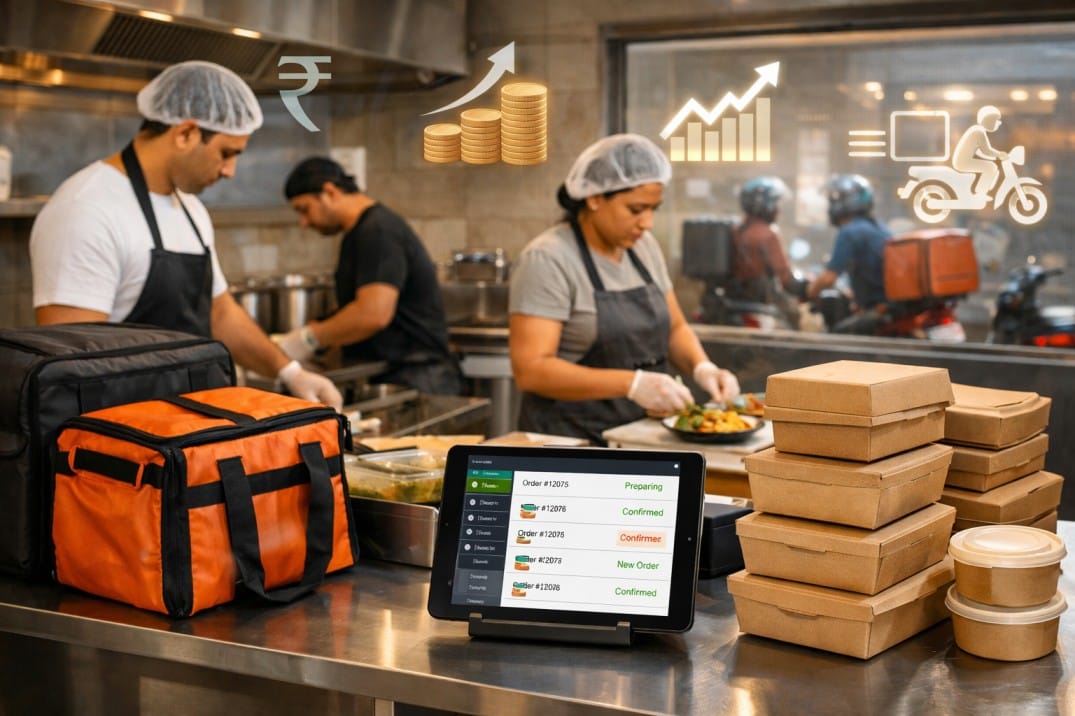
Cloud kitchens rely heavily on technology. They use POS systems, kitchen display systems (KDS), and automation tools to manage orders smoothly. Many of them also use platforms like Zopping to streamline restaurant operations.
Centralised Operations
Most cloud kitchens follow a centralised model, where everything from inventory to order tracking is managed from one place. This helps improve control and efficiency.
Located in Non-prime Areas
Since customer footfall isn’t a concern, cloud kitchens don’t need to be in expensive commercial areas. They’re usually set up in non-prime locations, which helps reduce rent and overall running costs.
Types of Cloud Kitchens
If you’re exploring how cloud kitchens work, it’s helpful to understand the different models that exist. Each one operates differently, depending on who runs it and what kind of food experience it offers. Let’s take a look at a few common ones:
Single-brand Cloud Kitchen
This is the most straightforward type. A single-brand cloud kitchen sticks to one cuisine or concept, like a delivery-only pizza place or a brand that only sells biryani. It’s perfect if you’re aiming to build a strong identity in a particular food category. Since there’s only one brand to manage, it’s easier to streamline operations, maintain consistency, and market the business to a specific audience.
Multi-brand Cloud Kitchen
In this setup, several virtual brands work under one roof. One kitchen might prepare Italian, Indian, and Mexican dishes using different brand names, all delivered through food delivery platforms. The goal here is to use the same kitchen resources, staff, and ingredients while reaching more customers with a variety of options. It’s like having three or four restaurants in one space, without the overheads of running separate outlets. This model works great if you want to experiment with different cuisines or target different types of customers from a single location.
Aggregator-run Cloud Kitchen
This type of kitchen is run by delivery platforms like Uber Eats. These companies provide the kitchen space and infrastructure, and they invite restaurant brands or chefs to set up shop there. The brands prepare food that’s sold exclusively through the platform’s app. For the food business, this reduces the hassle of setting up their own space. For the platform, it helps them control quality, delivery speed, and customer experience. If you’re a new food brand looking to scale quickly without investing heavily in property, this is a good way to start.
Restaurant-owned Cloud Kitchen
Here, an existing restaurant runs a cloud kitchen in addition to its main outlet. It’s usually set up in a different location to cover delivery orders in another area. This helps the restaurant increase its reach without opening a full dine-in branch. The restaurant uses the cloud kitchen purely for delivery, so they can serve more customers without crowding their main kitchen. It’s a smart way to expand and grow business without taking on the high costs of running a traditional outlet.
Franchise-based Cloud Kitchen
This model works like any other franchise. A larger food brand partners with individuals or businesses who run a delivery-only outlet using the brand’s name, menu, and standards. It helps the main brand expand to new locations quickly, while the franchise owner gets a ready-made business model to work with. Since there’s no dine-in setup involved, the overall investment and operating costs are much lower compared to traditional food franchises.
Advantages of Cloud Kitchens
Lower Capital Investment
Setting up a cloud kitchen costs far less than opening a dine-in restaurant. You don’t have to worry about interior design, wait staff, or seating arrangements. All you need is a functional kitchen space and a small team to prepare the food. This makes it a great option if you’re just starting out or want to test the market without spending too much.
Faster Launch for New Brands
Launching a new food brand is much quicker with a cloud kitchen setup. You don’t need months of planning or massive construction timelines. Once your kitchen is ready and your menu is finalised, you can start taking orders almost immediately through food delivery platforms.
Flexibility to Experiment
Cloud kitchens offer the freedom to try out new dishes, limited-time offers, or even tweak prices without much risk. You can test what works, get feedback quickly, and make changes on the go without the burden of reprinting menus or retraining floor staff.
Smarter Decisions with Data
With everything running through apps and digital platforms, you have access to valuable insights. You can track order volumes, delivery times, customer reviews, and popular menu items. This data helps you make better decisions about what to sell, when to promote, and how to improve customer experience.
Challenges or Considerations
While cloud kitchens open a lot of doors, they come with their own set of challenges that you’ll need to tackle head-on if you want to succeed in the long run.
Intense Competition
The cloud kitchen space is getting crowded. Many brands offer similar cuisines, which means you’ll need to work harder to stand out. Creating a strong brand identity, offering unique dishes, and consistently delivering quality are crucial if you want to survive and grow.
Heavy Dependence on Delivery Platforms
Most cloud kitchens rely on aggregators like Swiggy and Zomato to reach customers. This makes your business vulnerable to their commission rates, delivery service quality, and even their control over customer data. It’s convenient, but it also puts you in a dependent position, so consider building your own delivery channel over time.
Delivery and Logistics Headaches
Getting the food to your customers hot, fresh, and on time is a challenge in itself. You’ll need reliable delivery systems, strong packaging, and efficient routing to ensure customer satisfaction. One bad delivery experience can lead to poor reviews and lost orders.
Maintaining Hygiene and Quality
Just because customers don’t see your kitchen doesn’t mean they won’t judge your food. You need to keep hygiene levels high and maintain consistent quality in every order. This becomes even more critical when running multiple brands from the same kitchen.
Managing Operational Costs
Even though you save on rent and decor, cloud kitchens still come with costs. You’ll be spending on things like packaging, delivery fees, and technology platforms. If you’re not careful, these costs can eat into your profits. Keeping operations efficient and expenses in check is key to running a successful cloud kitchen.
Closing Thoughts
Cloud kitchens are changing the way food businesses work. With their tech-first approach, lower setup costs, and focus on delivery, they offer a flexible and scalable model that fits perfectly into today’s digital world. Whether you’re launching a new food brand or expanding an existing one, cloud kitchens give you the freedom to operate smarter and grow faster.
Ready to build or scale your own cloud kitchen?
Zopping for Restaurants brings everything you need into one easy-to-use platform. From managing orders and billing to handling deliveries and inventory, Zopping simplifies the entire process.
Start your journey with Zopping and run your cloud kitchen with more control, less hassle, and better results.
Share this article