Anika Bajaj
· Updated 20 May 2026 · 8 min read
On this page
The way people shop is changing fast, and hyperlocal ecommerce is right at the centre of it. With nearly 60% of online shoppers expecting same-day delivery (PwC) and local businesses increasingly moving online, the demand for fast, local, and convenient shopping experiences is only growing. In India alone, the hyperlocal delivery market is projected to hit ₹2,306 crore by 2027.
In this blog, we’ll walk you through everything you need to know about hyperlocal e-commerce, starting from how the model works, why it’s gaining popularity, and the benefits it offers for your business.
What is Hyperlocal E-commerce?
Hyperlocal e-commerce is all about connecting local buyers with nearby sellers through a digital platform. Think of it as a neighbourhood marketplace that works online. Customers place an order, and it gets delivered quickly from a store that’s just around the corner. The entire focus is on speed, convenience, and personalisation. Whether it’s groceries, medicines, or food, the aim is to get the product to the customer’s doorstep in the shortest time possible.
Key Features of a Hyperlocal E-commerce Platform
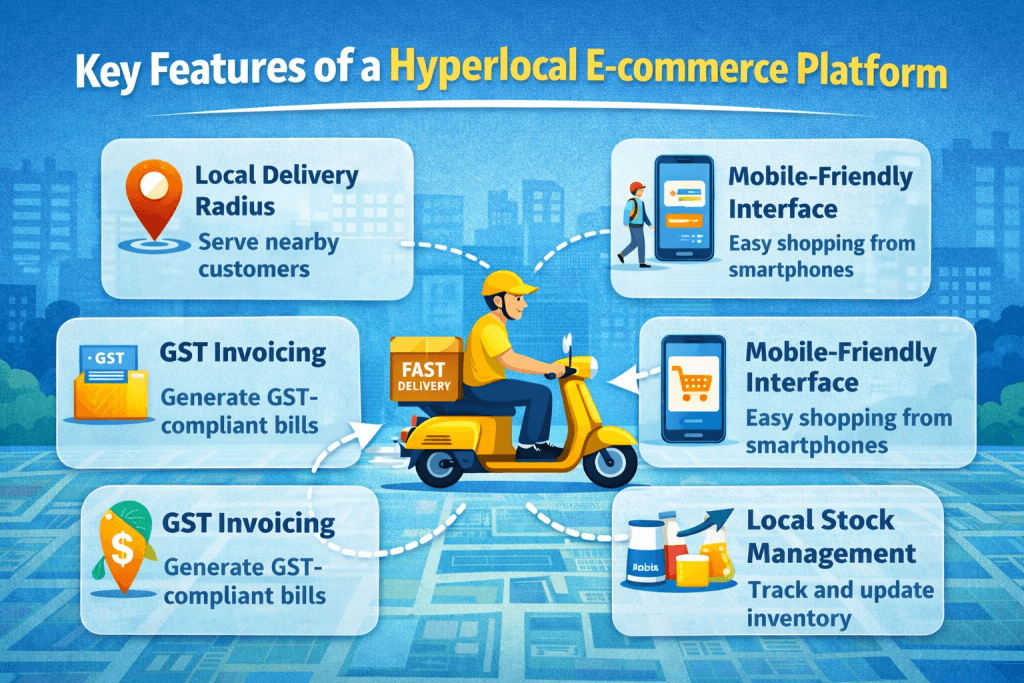
Here are some features that Hyperlocal e-commerce platforms come with:
Geo-Targeting and Real-Time Tracking
These platforms use geo-targeting to understand where the customer is and show them relevant local products and services. Real-time tracking lets customers follow their delivery status as it moves. Together, these features make sure people get what they need quickly while creating a smooth and trustworthy shopping experience.
Local Vendor Integration
The strength of a hyperlocal model lies in its vendor base. By working directly with nearby stores and service providers, the platform offers products that match the community’s preferences. This not only helps local businesses grow but also makes the entire shopping experience faster and more personal.
Quick Deliveries
Since everything happens within a specific area, deliveries are quicker and cost less. Hyperlocal businesses design their logistics to cover short distances with maximum efficiency. This model is especially useful for items like food, medicines, and everyday essentials, where time really matters.
Regional Language Support
People connect better when they shop in a language they’re comfortable with. That’s why many hyperlocal platforms offer support in regional languages. It helps customers browse the site or app easily, removes confusion, and makes the shopping experience more welcoming and accessible.
Convenience
Everything about hyperlocal e-commerce revolves around convenience. Customers don’t have to wait for days or deal with distant warehouses. They get fast deliveries, familiar products, and easy returns from vendors they often already trust. Plus, local stores benefit from digital exposure without having to set up their own apps or websites.
Smart Inventory Management
Hyperlocal platforms often have smart inventory management tools that help local sellers keep track of stock in real time. For example, if a business listed 20 chocolate chip cookies and someone orders one, the count will automatically drop to 19. This way, the business manager will always know what’s available and when it’s time to restock. It avoids delays, prevents overstocking, and makes sure customers only see what’s actually in stock.
Payment Flexibility & Security
To make things easier for everyone, hyperlocal platforms usually support multiple payment options. Customers can choose to pay online, use UPI, digital wallets, or even opt for cash on delivery. On top of that, most platforms follow strict security protocols to protect payment information.
Why is Hyperlocal E-commerce Important?
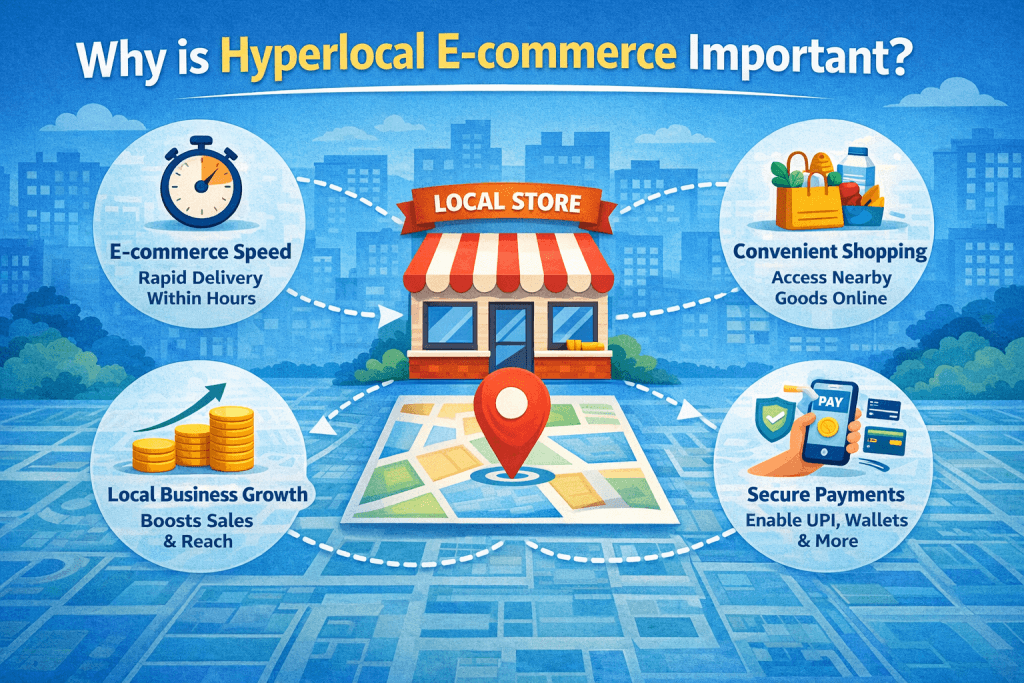
Here’s why Hyperlocal e-commerce is so important today:
Faster Delivery and Enhanced Convenience
When customers place an order, they don’t want to wait for days. Hyperlocal e-commerce connects local sellers to nearby buyers, making same-day or even same-hour delivery possible. Whether it’s groceries, medicines, or daily essentials, quick delivery keeps customers happy and builds brand loyalty. For you as an entrepreneur, this means a strong competitive edge and better customer satisfaction right from the start.
Support for Local Businesses
Hyperlocal platforms give small and mid-sized local shops a chance to go digital. Many of these stores already have loyal customers but lack the reach that online platforms provide. By tapping into this model, neighbourhood shops get a chance to grow and succeed in the digital space.
Increased Sales and Revenue
Hyperlocal e-commerce runs on real-time demand. People buy what they need, when they need it, from sellers nearby. This high-frequency, low-wait model often leads to more repeat orders and higher sales volumes. Whether you’re starting a new venture or investing in one, this model offers solid growth potential with faster turnaround on investments.
How Does Hyperlocal E-commerce Work?
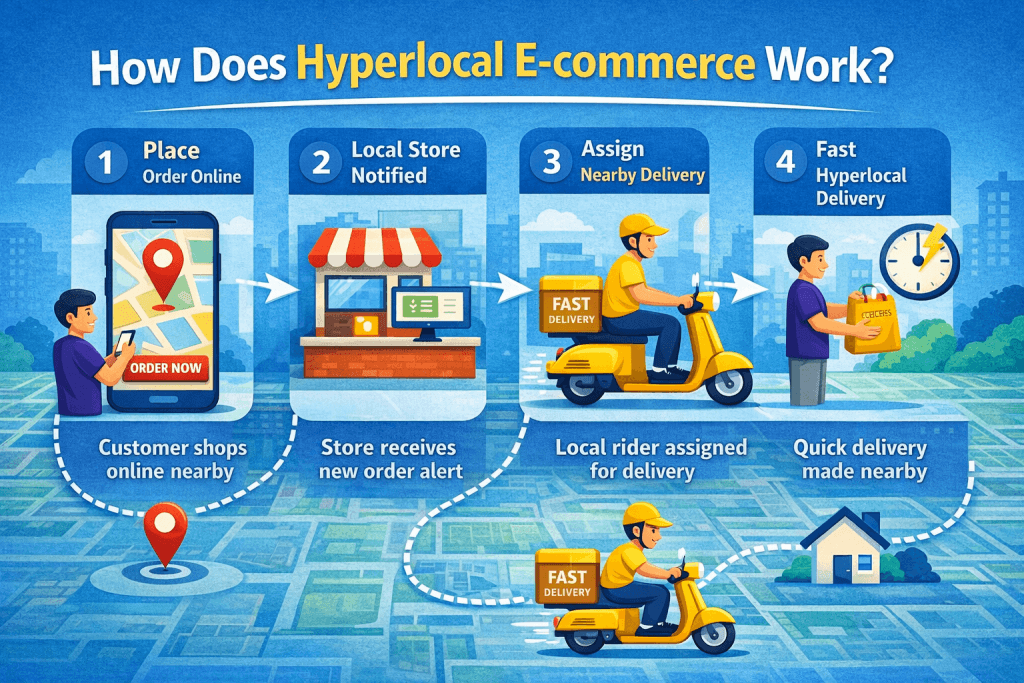
Hyperlocal e-commerce works through a mix of digital technology and local partnerships.
Here’s a closer look at it:
- It runs on a multi-vendor marketplace where stores from different localities are onboarded.
- Each customer sees a product catalogue that’s tailored to their location.
- The platform can be accessed through a mobile app, website, or even in-store.
- When an order is placed, it’s sent directly to the nearest vendor.
- Deliveries are handled by either the platform’s own team or local delivery partners who know the area well.
Order Placement Options:
- Directly from the Mobile App
- Using the Website
- In-store
Delivery Options:
- Home delivery
- Pick-up from the nearest store
This structure allows hyperlocal e-commerce platforms to scale fast without losing the personal touch. It blends the reach of online shopping with the familiarity and trust of local retail.
What is the Process to Set Up a Hyperlocal eCommerce Site?
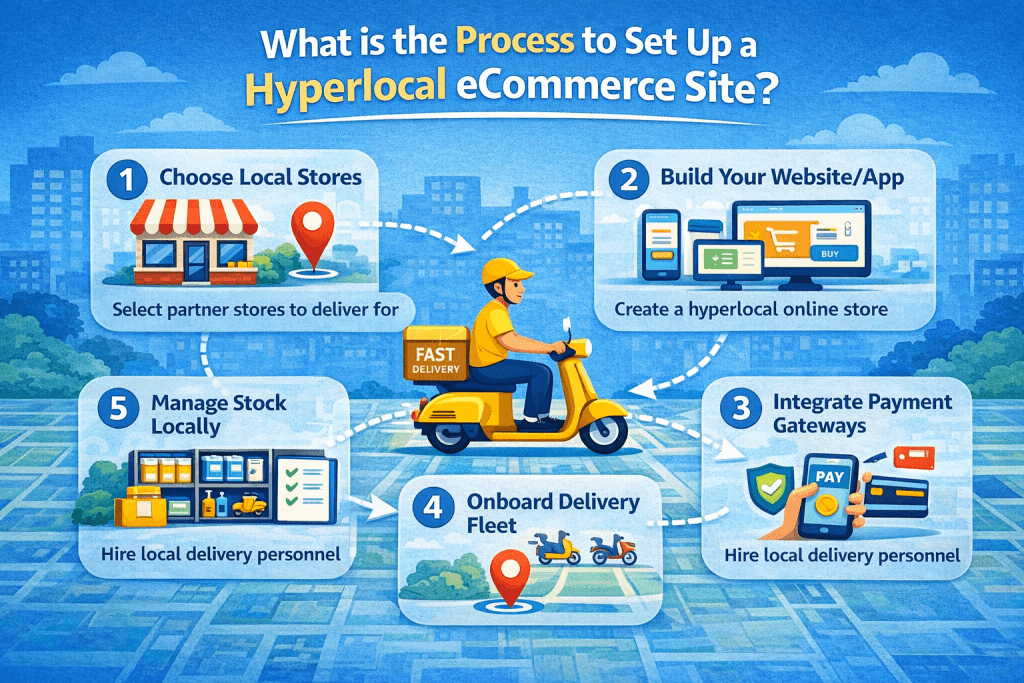
If you want to build a Hyperlocal e-commerce marketplace for your brand, here’s what you should keep in mind:
Pick Your Area and Product Categories
Start by choosing the location you want to serve. This could be your city, a neighbourhood, or even a cluster of localities. Keep it tight and manageable. Next, decide what kind of products you’ll focus on. Are you delivering groceries, medicines, daily essentials, electronics, or something else? The more specific you are, the easier it becomes to streamline operations and meet customer expectations.
Build a Strong Delivery Network
Speed is everything in hyperlocal delivery. So, you need a reliable delivery team. You can hire your own riders or tie up with local delivery partners. Make sure they know the area well and can deliver quickly.
Create a Smooth Mobile App and Website
Create a Mobile App and Website as they are the face of your business. They should be easy to use, load quickly, and offer features that matter. Real-time tracking, simple checkouts, live chat, and clear product listings make a big difference. A smooth user experience keeps customers coming back.
Use Order and Inventory Management Tools
Behind the scenes, your tech should help you stay organised. Use proper systems to track inventory, manage orders, and avoid delays or errors. When you know exactly what’s in stock and what’s going out, everything runs smoother. This also helps you avoid those awkward “out of stock” moments that drive customers away.
Promote Your Service the Smart Way
Even the best hyperlocal platform won’t work if people don’t know about it. Focus your marketing on the area you’re serving. Use local ads, social media, WhatsApp broadcasts, and collaborations with nearby stores or influencers. The ultimate goal is to reach the people who are most likely to use your service and keep them coming back.
What is the Best Software to build a Hyperlocal e-commerce Store?
If you wanted to build an e-commerce site a few years ago, you’d probably need coding skills or a developer’s help. But that’s not the case anymore. Today, you can set up a hyperlocal e-commerce platform without touching a single line of code. Tools like Zopping make the entire process easy by handling the technical work for you. All you need to do is choose a theme, add your store details, upload product info, and you’re pretty much good to go.
Here are some of the best software options to help you build your own hyperlocal e-commerce platform:
- Zopping
- StoreHippo
- Dukaan
- JungleWorks
- Fynd Hyperlocal
Ready to Start?
Connect with nearby customers and deliver in minutes. Zopping makes hyperlocal e-commerce simple for your business.
Closing Thoughts
Hyperlocal e-commerce brings local shops and customers closer in a simple and fast way. It helps people get what they need quickly while supporting small businesses nearby. Building a platform like this takes focus on the right location, smooth technology, and strong delivery. With tools like Zopping, anyone can create a local online marketplace that works well for the community.
FAQs
Tap a question to read the answer.
If you run an online store and want to go hyperlocal, start by narrowing your focus to a specific area or neighbourhood. Build partnerships with local sellers, set up local delivery systems, and make sure your product listings reflect what people nearby actually need. Going hyperlocal means being faster, more personal, and more relevant to your local audience.
Begin by onboarding local vendors who can supply products quickly within a set area. Use tools like Zopping to set up your store and manage inventory and deliveries in real time.
Start small. Look at where most of your current customers are based and test delivery within that zone. Consider travel time, delivery costs, and how fast you want orders to reach your customers. You can always expand the radius later based on demand and your delivery capacity.
Popular payment solutions for hyperlocal delivery services in India include Razorpay, Paytm Payment Gateway, PhonePe Payment Gateway, and Cashfree Payments
.These platforms support UPI, wallets, cards, QR payments, and fast mobile-first checkout experiences, making them ideal for hyperlocal and quick-commerce businesses.
Still have a question?Our team is happy to help you set up your store.
Share this article