Anika Bajaj
· Updated 20 May 2026 · 9 min read
On this page
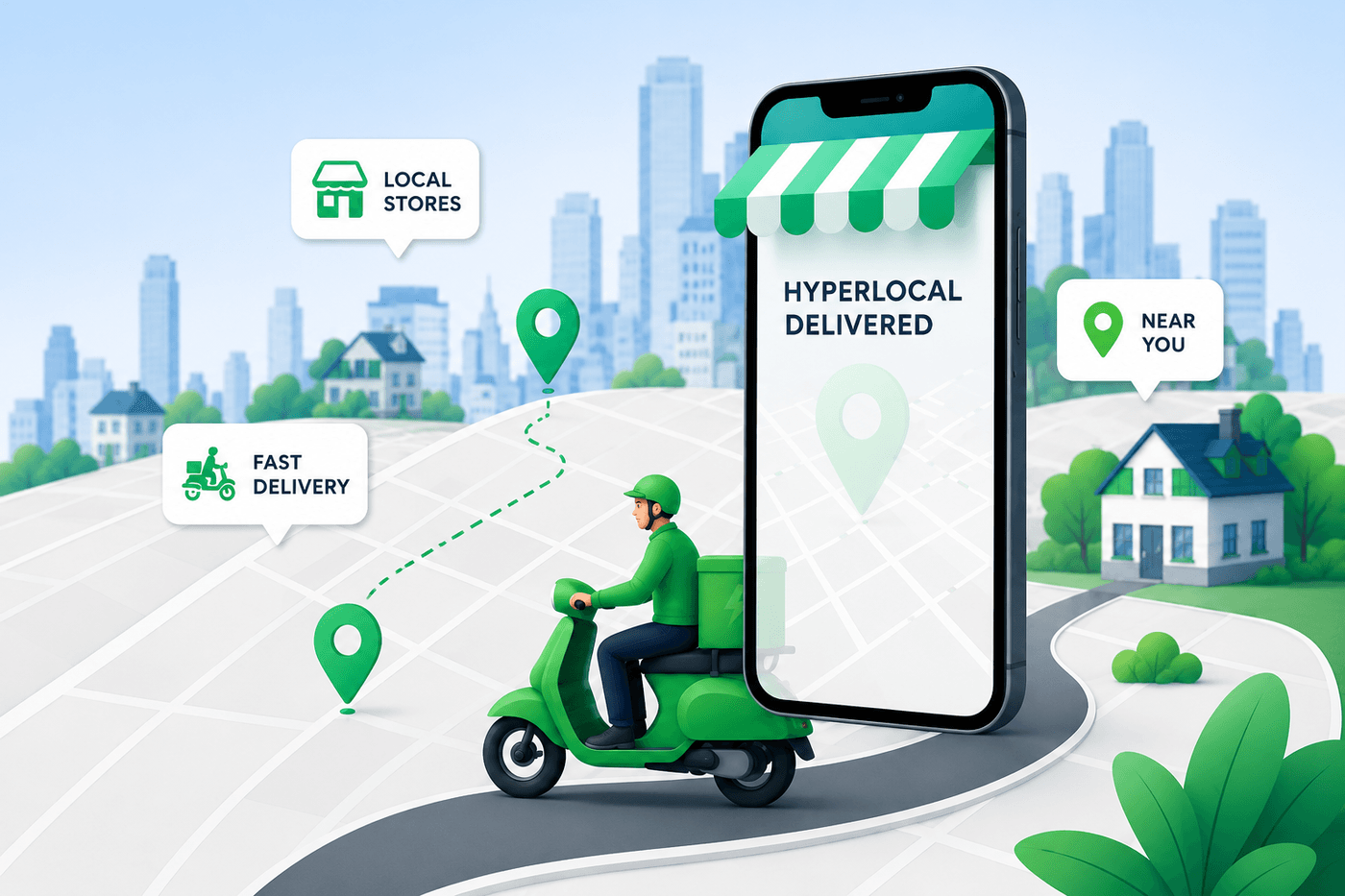
Hyperlocal delivery is a logistics model that connects local businesses with nearby customers to deliver goods within a short, targeted radius , often within hours, by leveraging digital platforms and local inventory. It’s especially popular for groceries, food, and essentials thanks to its speed, convenience, and community focus.
What is Hyperlocal Delivery?
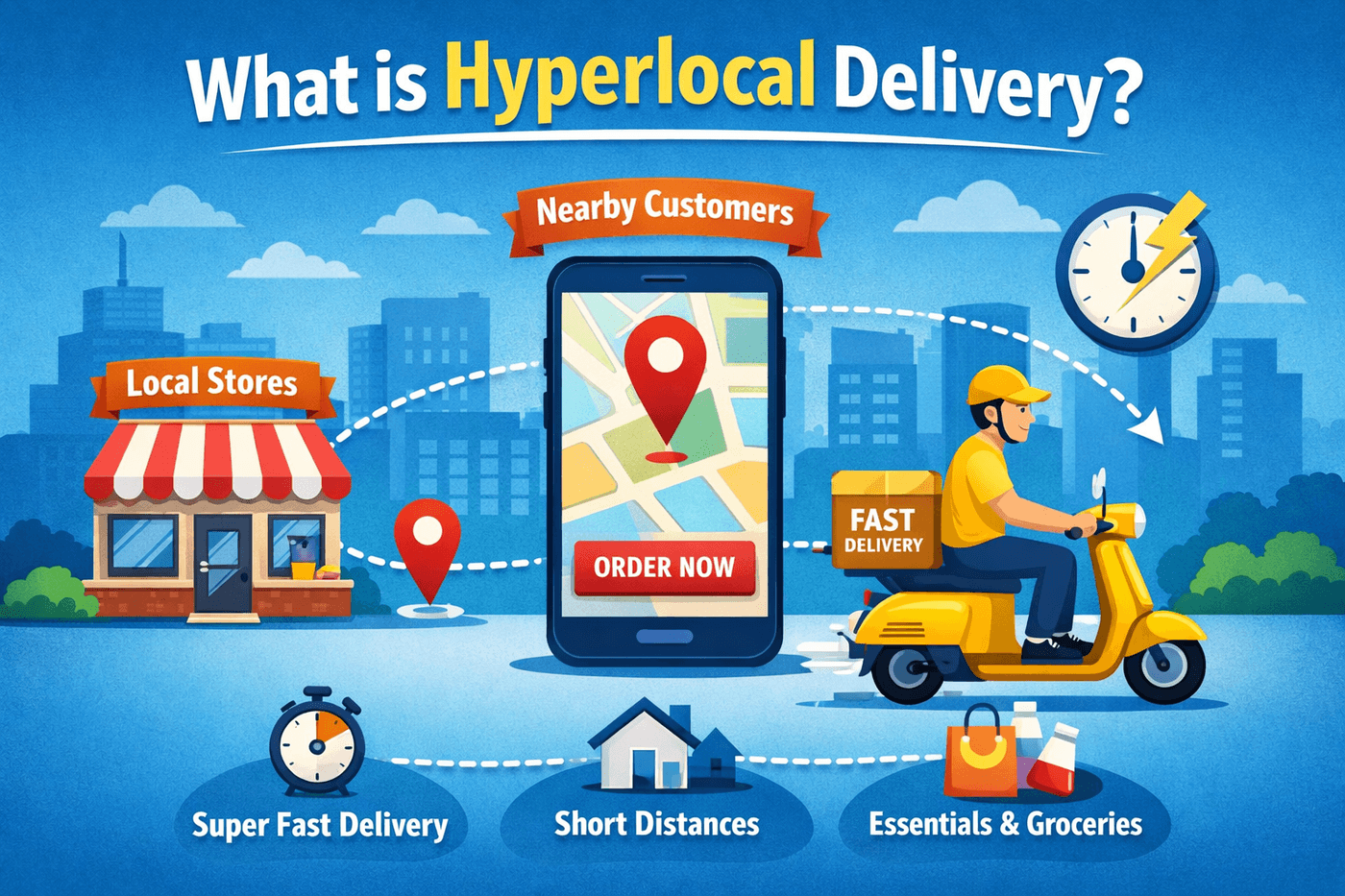
Hyperlocal delivery is a logistics model that focuses on delivering products from local sellers to customers within a specific, limited geographic area. This area is usually restricted to a neighborhood, a few city blocks, or a small zone within a city. The goal is to fulfill orders quickly, often within a few hours or minutes, using resources that are already nearby.
It is commonly used for products like groceries, food, medicines, personal care items, and other daily essentials. Instead of relying on large warehouses or long-distance transportation, hyperlocal delivery connects nearby stores and service providers directly with customers. This model reduces delivery time, improves efficiency, and supports local businesses by keeping the entire transaction within a close radius.
What Are The Different Types of Hyperlocal Delivery Business Models in India?
Here are the 4 different types of hyperlocal delivery models businesses operate from:
Single Store Model
The single store model keeps everything in-house. You handle everything yourself right from taking the order to delivering it. Many small restaurants, bakeries, and grocery shops follow this model. For example, you might take orders over the phone or WhatsApp and have your staff deliver them within your local area. It’s simple, cost-effective, and gives you full control over customer experience.
Store Pick Model
In this setup, customers place their order online or through an app and then come to your store to pick it up. It reduces your delivery workload and gives customers a quick and flexible option. Think of it as click-and-collect. If you’re running a store with a small team or limited delivery resources, this model helps you serve more people without needing a delivery fleet.
Hybrid Model
This model lets customers choose between delivery or in-store pickup. It offers flexibility and works well if you already have some delivery setup but also want to serve walk-in or pickup customers.
Aggregator Model
Here, you partner with platforms like Zomato, Swiggy, Instamart, or Dunzo. They take care of the app, the visibility, and the delivery. You just focus on preparing the order. It’s a quick way to reach more customers without investing in your own delivery setup, although you’ll need to factor in platform commissions and shared branding.
Read more about, Hyperlocal Delivery Companies in India
How Does Hyperlocal Delivery Work?
Hyperlocal delivery operates through a tight and well-connected chain of steps. It begins the moment a customer places an order and ends when the product is delivered to their doorstep, often on the same day or even within the hour.
Let’s take a closer look at how the hyperlocal delivery process typically works:
Step 1: Order Placement
It all starts when a customer places an order. This can happen through a mobile app, website, or even a phone call, depending on your setup. As a business owner, your role here is to make the ordering process smooth and hassle-free. Make sure your inventory is updated, your menu or product list is clear, and your platform is easy to navigate. The easier it is for customers to place an order, the more likely they are to come back.
Step 2: Order Acceptance and Fulfillment
Once you receive the order, confirm it quickly. Make sure everything is correct and ready on time. Whether you’re delivering yourself or using a partner, smooth order prep and fast handoff keep things running without delays.
Step 3: Delivery Partner Assignment
After the package is ready, the system assigns a delivery partner. This can be an in-house delivery executive or a third-party logistics provider, depending on the setup. The platform will typically select the nearest available delivery resource to reduce pickup time and improve delivery speed.
Step 4: Real-Time Tracking
Once the delivery partner collects the package, real-time tracking begins. The customer can monitor the delivery status through the app, including estimated arrival time and live location of the delivery executive. This improves transparency and builds trust in the delivery process.
Step 5: Delivery Completion
The next step is order handover. The delivery partner reaches the customer’s location and completes the delivery. For prepaid orders, confirmation is automatic. For cash on delivery, payment is collected upon delivery. Once confirmed, the system marks the order as fulfilled.
Step 6- Customer Feedback
Once the order is delivered, it’s time to hear from your customer. Ask customers to rate their experience and leave a comment if they can. This helps you figure out what’s working and what needs fixing. When you take their feedback seriously and make changes, customers feel heard. This builds trust, encourages repeat orders, and keeps your service ahead of the competition.
What Are The Benefits of Hyperlocal Delivery
If you’re running a local business or thinking about starting a delivery-based venture, hyperlocal delivery is something you shouldn’t ignore. It helps you stay competitive, build stronger customer relationships, and grow your business without spending a fortune. Whether you run a kirana store, a bakery, or even a pharmacy, this model can help you reach more customers around you quickly and efficiently.
Let’s take a closer look at the real advantages this model offers for businesses:
Reduced Logistics Costs
Since deliveries happen within a short radius, you don’t need a massive fleet or complex infrastructure. Fewer resources mean lower costs. Fuel expenses drop, the wear and tear on vehicles is reduced, and you might even avoid warehousing altogether. For a small or mid-sized business, this translates to better profit margins and more control over your daily operations.
Makes Daily Operations Easier
Handling deliveries within nearby areas simplifies your workflow. Orders are easier to manage, and delivery staff can cover more orders in a day. This helps during busy times like weekends or holidays when demand is high.
You Can Scale Gradually
This model grows with your business. If you start with two delivery zones today and see more demand in nearby areas, you can expand your reach gradually without making huge investments. During slower periods, you can scale down easily too. This kind of flexibility is hard to find in traditional logistics models.
Improved Customer Satisfaction & Retention
Hyperlocal delivery can seriously boost customer satisfaction. When you offer fast delivery and let customers choose when they want their items, you’re giving them exactly what they need. No one wants to wait days for a package. With hyperlocal delivery, customers often get their orders within hours. That kind of speed leaves a strong impression and increases the chances they’ll buy from you again.
What makes it even better is the flexibility. When customers can pick a delivery time that fits their schedule, it adds convenience to their day. Whether they prefer evening deliveries or need something quick during lunch, your service fits right into their routine. This mix of speed and control builds trust and loyalty, which helps keep your business growing.
Fewer Delivery Issues and Faster Deliveries
When you’re delivering within a small area, you’re working with familiar roads and shorter travel times. This reduces the chances of late or failed deliveries. Your team knows the local routes, which means faster deliveries and happier customers.
Improved Sustainability
Since deliveries happen over short distances, the environmental impact is lower. Many hyperlocal services also use bikes or electric vehicles to reduce their carbon footprint further. For eco-conscious customers, this is a huge plus.
Which Businesses Should Use Hyperlocal Delivery?
If your business sells items that are needed quickly or often, hyperlocal delivery can be a good fit. Here are some examples:
- Grocery shops and general stores
- Food outlets, cloud kitchens, and tiffin services
- Pharmacies and healthcare providers
- Shops selling fruits, vegetables, meat, and dairy
- Clothing stores and boutique shops
- Electronics, mobile, and gadget sellers
- Stationery, book, and school supply shops
- Bakeries and sweet shops
- Florists and small gift shops
- Home décor and small furniture sellers
- Pet food and supplies stores
- Beauty and skincare brands
- Laundry, and other local service providers
- Auto parts and accessories stores
How Zopping Powers Hyperlocal Delivery Busines
Zopping assists local businesses with their online presence and deliveries. It provides tools to simplify operations, making it easier for businesses of all sizes to manage their work. Here’s a breakdown of how it helps:
- Launch your online store without writing a single line of code
- Set up a mobile-ready website using ready-made themes
- Manage orders and inventory from a single dashboard
- Connect with local delivery services for faster doorstep service
- Get 24×7 expert support for keeping your store online
Zopping is more than just an online store builder. It’s your complete toolkit for running and scaling hyperlocal deliveries with ease.
Closing Thoughts
Hyperlocal delivery is changing how local businesses connect with nearby customers. It’s fast, practical, and fits the way people shop today. Whether you’re starting fresh or looking to grow, this model offers a simple way to stay close to your market. Adopting this approach can open new opportunities and build stronger local ties. With the right tools like Zopping, managing hyperlocal delivery becomes much simpler and more reliable.
FAQs
Tap a question to read the answer.
Hyperlocal delivery usually takes between 10 minutes to a few hours. The speed depends on how far the customer is from the seller, local traffic, and how well the delivery system is managed. It’s designed to offer fast, same-day service within a small local area.
Running a hyperlocal setup isn’t always smooth. You might face challanges like limited flexibility, unexpected costs, or poor coordination. Sometimes, the delivery routes aren’t planned well, which can slow things down and affect customer experience. If the system isn’t managed properly, it can impact your overall delivery performance and lead to more stress than sales.
Not at all. It also covers medicines, personal care products, electronics, flowers, pet supplies, and even home services like plumbing or salon visits.
Traditional eCommerce often relies on large warehouses and takes a few days to deliver. Hyperlocal delivery, on the other hand, uses nearby stores or service providers to fulfill orders quickly within the same day, sometimes in under an hour.
Yes, they can. Many small businesses use third-party delivery apps or tie up with local delivery services to offer hyperlocal options. Some even build their own small delivery teams.
Hyperlocal delivery focuses on ultra-fast delivery within a few kilometers, often in real-time. Local delivery might cover a slightly wider area and usually doesn’t promise such quick turnarounds. Hyperlocal is more about instant service, often within the hour.
Yes, Zomato operates in the hyperlocal space. They deliver food, groceries, and even small packages within a specific area. Their entire model is built around quick, local deliveries that serve nearby customers.
In India, the delivery range for most hyperlocal services is usually between 3 to 10 kilometers. Keeping the delivery area small helps businesses reach customers quickly and maintain timely deliveries.
Still have a question?Our team is happy to help you set up your store.
Share this article