Anika Bajaj
· Updated 20 May 2026 · 6 min read
On this page
When it comes to delivery services, it’s easy to mix up terms like hyperlocal delivery and last-mile delivery. Many people think they’re the same, but they work in different ways. In this blog, we’ll break down what each one means and help you understand how they’re different from each other. By the end, you’ll know exactly which one suits your business or daily needs better.
What is Last Mile Delivery?
Last-mile delivery is the final step of the order journey before it reaches you. Once an order leaves the warehouse and travels through different hubs, it finally reaches a local center near your address. From there, a delivery agent picks up your package and brings it right to you. For example, if you order something from Mumbai and it arrives in Delhi, the part where the local delivery person takes it from the Delhi hub to your home is called last-mile delivery. This step is all about making sure your order reaches you safely and on time.
What is Hyperlocal Delivery?
Hyperlocal delivery means getting products delivered quickly from a nearby store or vendor in your area. These deliveries usually happen within a small range, somewhere between 5 to 20 kilometers. The time can vary, but it often takes just 10 minutes to 2 hours, depending on how close the store is and whether the product is available.
This model is becoming popular because it connects local sellers directly to nearby customers, cutting down on waiting time. Even though it’s still growing in India, more logistics and courier companies are offering it because it makes shopping easier and faster for everyone.
Read More: What is Hyperlocal E-commerce? Business Model & Benefits
What’s the Difference Between Last-Mile and Hyperlocal Delivery?
Last-mile delivery is the final leg of any delivery, bringing goods from a distribution hub to the customer’s doorstep, regardless of the overall distance. Hyperlocal delivery, popular in India, specifically focuses on extremely quick deliveries (often within hours) from nearby local stores or vendors to customers within a very small geographical radius, typically a few kilometers.
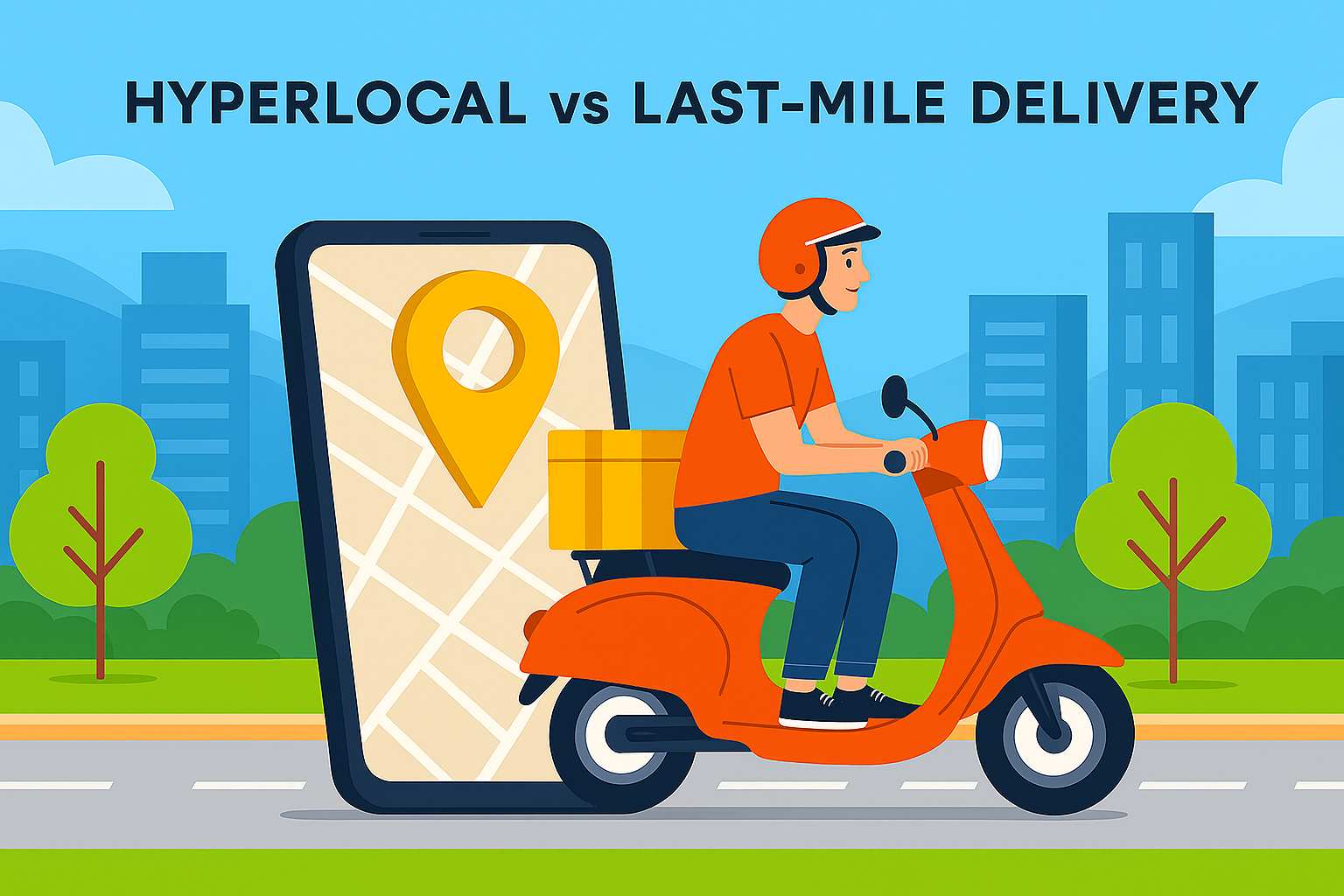
Hyperlocal Delivery vs Last Mile Delivery
| Aspect | Hyperlocal Delivery | Last-Mile Delivery |
|---|---|---|
| Delivery Timeframe | Hyperlocal delivery aims to get orders to the customer within two to three hours from the time the order is placed. This is possible because it only serves customers within a small local area, usually around five to fifteen kilometres. | Last-mile delivery usually takes longer to complete. The average time ranges from twelve to sixteen hours, starting from when the order leaves the final hub until it reaches the customer’s address. Delivery notifications often show a window that can last the whole day. |
| Speed of Service | This model is built for very fast service. Orders are often dropped off on the same day and sometimes within just a few hours, since the delivery happens within a smaller local radius. | Faster than traditional long-distance shipping but slower than hyperlocal. Depending on how far the hub is and what service level is chosen, it can be same-day or next-day, but is not always as quick as hyperlocal. |
| Who Handles Delivery | In some cases, local shop owners may deliver nearby orders themselves. However, most hyperlocal services use a network of delivery partners who ride two-wheelers or bicycles. These partners are usually managed through local delivery apps or digital platforms. | Some businesses deliver short distances directly, but most companies work with large courier or logistics providers that have the vehicles, trained staff and systems needed to cover bigger areas and higher volumes. |
| Weight and Package Size | Mostly deals with lighter and smaller parcels. Common items include groceries, freshly prepared food, and medicines. Using bikes and cycles makes it easier to handle these smaller loads within city limits. | Can handle a much wider range of package sizes and weights. Everything from small gadgets to big furniture or appliances can be delivered. Larger items might have extra delivery charges because they require bigger vehicles and special handling. |
| Delivery Distance | Stays within a limited local area, usually five to fifteen kilometres from the pick-up point. In some cases, the range may extend up to twenty or twenty-five kilometres for special intra-city orders. | There is no strict limit on how far last-mile delivery can reach. The distance depends on how far the customer’s address is from the final delivery hub. This distance can easily be more than thirty kilometres, especially in big cities or semi-urban areas. |
| Types of Products Delivered | Best suited for items that need to be delivered quickly, such as hot meals, grocery essentials and urgent medicines. This is very useful for urban customers who need things immediately. | Suitable for a wide variety of goods. It can handle clothes, electronics, home décor, large household items and even sports equipment. It gives businesses the flexibility to reach customers in different cities and regions. |
Read More: How Zopping Powers Hyperlocal Delivery Business?
The Relevance of Last-Mile & Hyperlocal in Today’s Times
These days, people want their orders faster and with zero hassle. Whether you’re getting groceries, medicine, or a quick gift for someone, waiting too long just doesn’t work anymore. This is where last-mile and hyperlocal delivery prove their worth.
When deliveries reach you on time, it builds trust and keeps you coming back to that shop or app. Quick and safe last-mile delivery can turn a one-time buyer into a regular customer. Hyperlocal delivery takes it a step further by bringing your local stores online so you can get what you need from your neighbourhood without stepping out.
For businesses, this isn’t just an additional service anymore. It’s what keeps them competitive. People love the ease of nearby stores delivering to their doorstep within hours. It saves time, supports local sellers, and meets the modern need for speed and convenience. In a world that doesn’t like to wait, strong last-mile and hyperlocal systems keep everyone connected and satisfied.
Closing Thoughts
Both last-mile and hyperlocal delivery help you reach your customers the way they expect today. Knowing how each one works can guide you to plan better and serve faster. Use these models wisely to grow your business and keep your customers happy.
Deliver Smarter, Grow Faster
Unlock seamless hyperlocal and last mile delivery solutions-reach more customers, reduce delays, and scale your business effortlessly with Zopping.
Frequently Asked Questions (FAQs)
Tap a question to read the answer.
Hyperlocal delivery means getting products from a local seller or hub to customers who live close by, usually within a few kilometres. Last-mile delivery is the final step in a bigger supply chain. It takes items from a central warehouse or hub and brings them to the customer, often covering longer distances.
Grocery stores, local pharmacies, cloud kitchens, and neighborhood restaurants gain the most from hyperlocal delivery. It helps them reach nearby customers quickly, often in just a few hours or even minutes.
Yes, hyperlocal delivery is generally faster because it covers a smaller area and uses local stock. Last-mile delivery can take longer since it deals with wider routes and more delivery points.
Yes, many businesses use both. They handle fast local orders through hyperlocal delivery and rely on last-mile delivery for orders that need to go to other cities or regions.
Hyperlocal delivery depends a lot on real-time tracking, GPS, and managing local delivery fleets. Last-mile delivery puts more focus on route planning, warehouse operations, and connecting with bigger logistics networks.
Still have a question?Our team is happy to help you set up your store.
Share this article